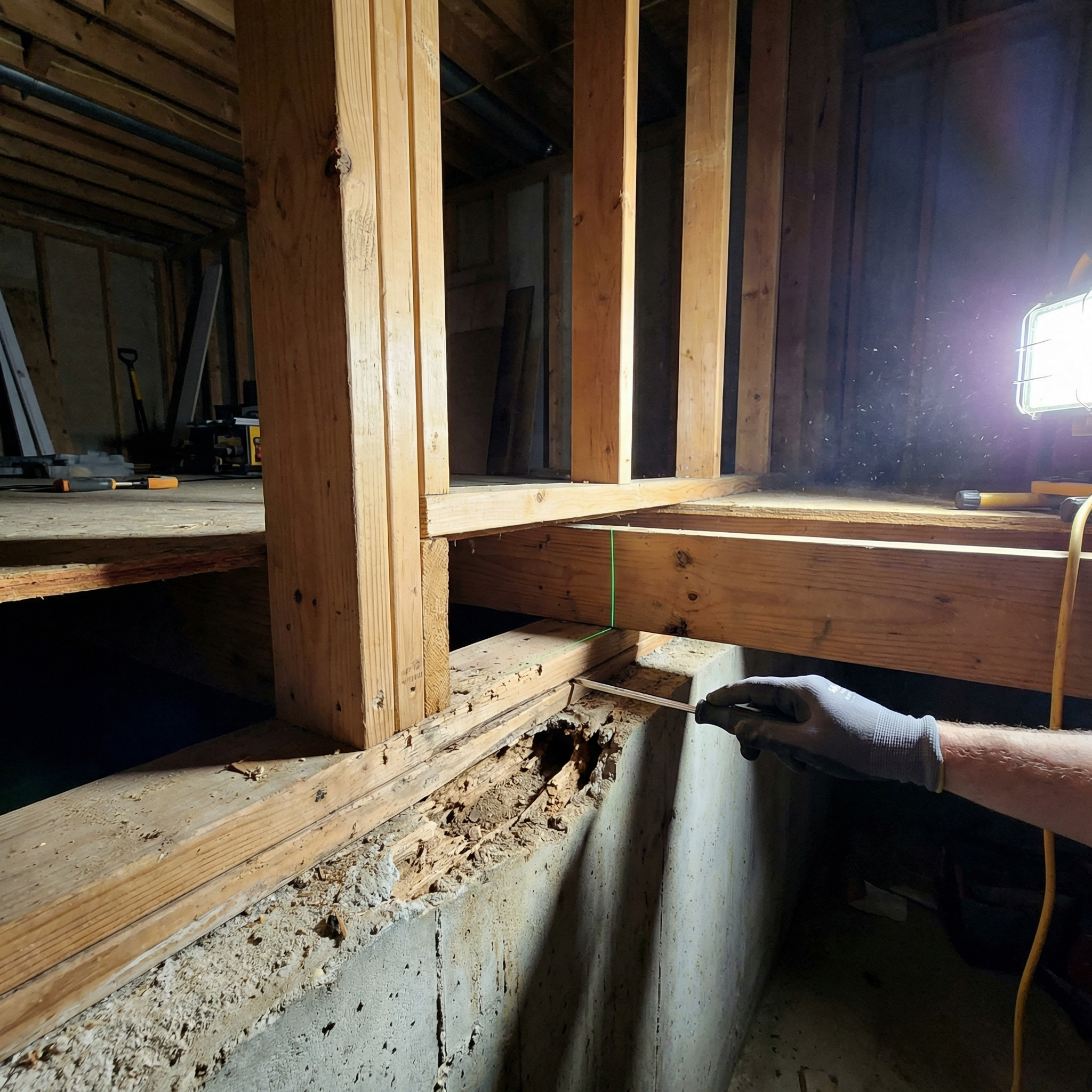

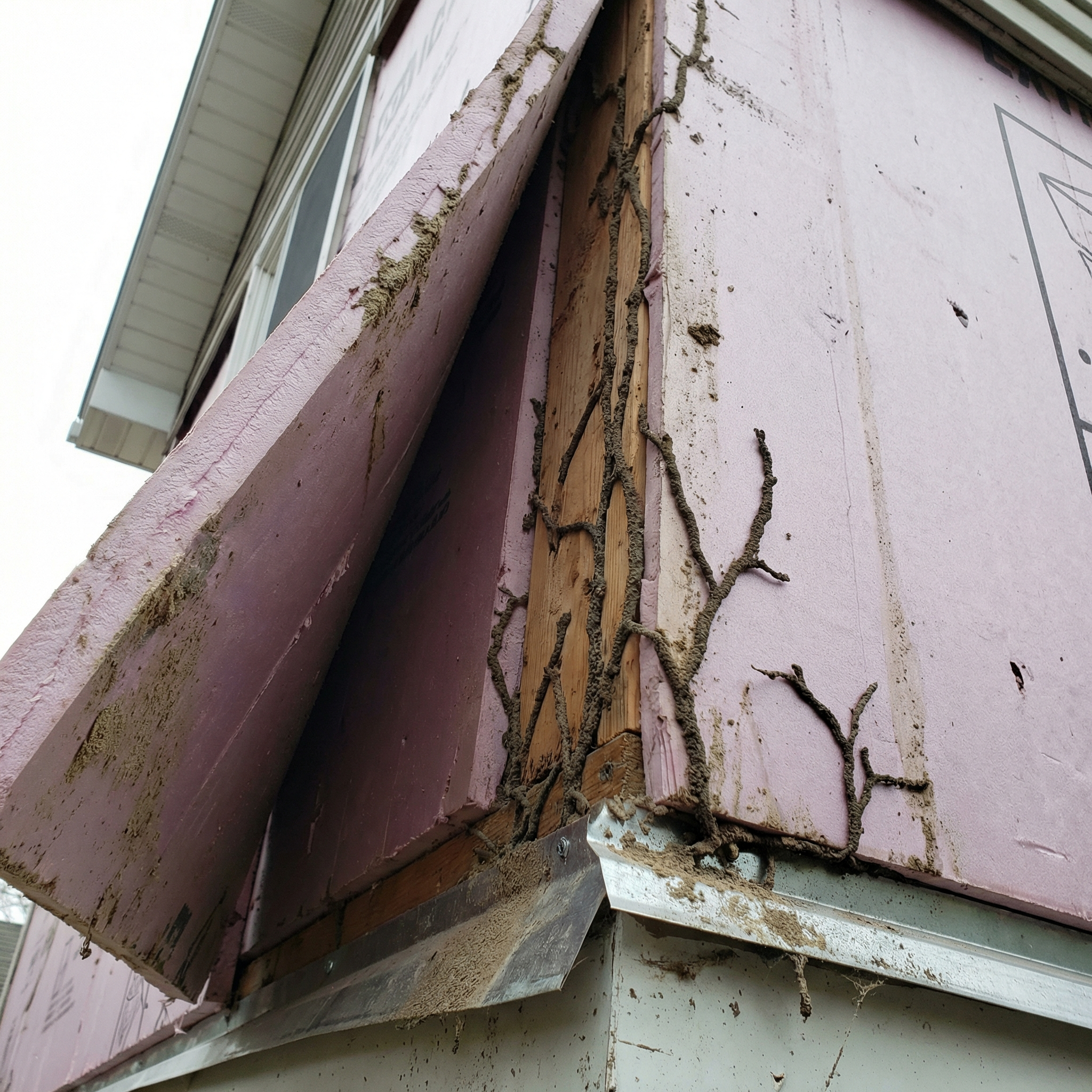
Foam Board Insulation and the Termite Visibility Problem
Rigid foam board against a foundation can be great for energy savings, but it creates a serious challenge for termite inspections. When that foam continues below grade, it covers the exact area where inspectors expect to see mud tubes and other activity. Termites can travel unseen between soil and structural elements while staying protected behind the insulation. For pest professionals, the solution is not to condemn foam board outright, but to pay close attention to flashings and where the insulation terminates above grade. Those small construction details decide whether tunneling stays hidden or becomes visible during a routine inspection.
Below-Grade Foam: Why Termite Tunnels Stay Out of Sight
When foam board insulation is installed down to or below soil level, it forms a continuous, sheltered corridor against the foundation. Termites are naturally drawn to tight, moist spaces where they are shielded from light and predators, and the gap behind foam delivers exactly that. Instead of building obvious tubes on exposed concrete, they can tunnel behind the board, climb, and emerge higher up where damage is harder to trace. An inspector walking the perimeter may see a clean surface and assume things are sound, even while extensive tunneling is hidden behind the panels. That is why below-grade foam should always raise an inspection red flag and trigger closer scrutiny.
On many homes, especially energy-efficient and retrofit projects, installers push foam down to meet the soil for a cleaner visual line. While it looks neat from a curb-appeal perspective, it removes the exposed band of foundation that inspectors depend on for early-warning signs. Once that visual reference is gone, you are forced to infer termite activity from less direct clues such as moisture patterns or damaged trim. This guesswork increases the chance of missing early infestations and catching problems only after termites have reached framing members. Recognizing these risk conditions is the first step toward adjusting inspection tactics around foam-clad foundations.
Reading the Foam-to-Foundation Transition Line
The most critical zone for a termite inspector is the transition line where foam board meets the exposed foundation. If there is any visible foundation left between the bottom of the siding and the soil, that band becomes your inspection window. Along this strip, you should look for mud tubes climbing over concrete, staining, or irregular surface textures that could indicate tunneling behind the foam. Any cracks or gaps between the foam and foundation also deserve probing, because termites can emerge through hairline spaces. Even a narrow exposed line offers valuable clues if it is examined carefully and consistently.
Where the foam runs all the way into the soil, you must assume that your visibility is compromised and document it clearly. In those areas, gently probe along edges, seams, or terminations where tubes are most likely to emerge. Pay close attention to corners and changes in materials, because termites often exploit those transitions. If landscaping, mulch, or hardscape features cover the bottom of the foam, note that as a further obstruction to inspection. The key is to treat every hidden interface as a potential highway, not a finished surface you can safely ignore.
Protective Flashings That Turn Hidden Paths into Visible Breaks
Protective flashings installed at the top or face of foam board can interrupt termite travel and restore some visibility for inspectors. These flashings are often thin metal or rigid plastic pieces that project slightly from the wall, creating a physical break between foam and the structure above. When correctly positioned, they force termites to exit their hidden route to cross the flashing and re-enter behind it. That crossing point becomes a place where tubes are more likely to appear in the open, where you can see and record them. For an inspector, a well-placed flashing is less about water management and more about turning a concealed pathway into an inspectable control point.
During inspections, do not just note whether flashings exist; evaluate how they interact with the foam and adjacent materials. Look for continuous, intact runs that are firmly attached and not buried under caulks or sealants that might allow hidden bypasses. Check whether flashing edges are visible and accessible instead of disappearing into soil, mulch, or thick coatings. Be suspicious of improvised or pieced-together flashing systems that leave gaps or overlaps termites can exploit. When flashings are missing or obviously compromised, your report should flag that as a condition limiting effective monitoring around the foundation.
Verifying Above-Grade Terminations on Existing Homes
Where foam board ends above grade, the termination detail matters just as much as the insulation itself. A safer configuration leaves a noticeable band of exposed foundation between the bottom of the foam and the soil, creating a clear inspection zone. Inspectors should measure and photograph this gap, noting areas where the distance to soil is shrinking because of landscaping changes or settling. If mulch, rock, or soil has been piled against the foam, the original safe termination may now function like a below-grade installation. In those cases, the home has effectively lost its inspection band, and termite risk increases even if the original build was more cautious.
Inspect every transition between foam board and other cladding materials, such as where foam stops and siding or masonry begins. Look for sealants, trim pieces, or decorative bands that might create concealed pockets at those joints. If you see staining, soft materials, or insect frass along a termination line, treat it as a priority area for closer probing. Where practical and allowed by your agreement, gently lift loose trim or small sections of finish to check for concealed tubes. The goal is to confirm that the termination detail keeps a visible break between soil, foam, and structure, not a continuous hidden surface.
Inspection Workflow When Foam Insulation Obstructs Your View
When you arrive at a property with extensive foam board around the foundation, your inspection workflow should be adjusted from the very first perimeter walk. Begin by mapping all sides of the structure where foam is present, noting which runs are above grade and which are at or below soil level. Mark locations where flashings, terminations, or transitions appear vulnerable or poorly detailed. As you move, document every area where foam, landscaping, or hardscape prevents a thorough visual inspection. This early mapping helps you separate truly inspectable zones from those you can only assess indirectly.
After the initial walk, return to high-risk sections with more focused tools and techniques. Use strong lighting and a probe to test cracks, seams, and the small segments of exposed foundation that remain. Pay attention to moisture patterns on the foam surface, because persistent dampness often parallels termite-friendly conditions at the hidden interface behind it. In your report, be explicit about which surfaces were obscured and how that limits your ability to guarantee that all termite activity would be visible. Clear process and clear documentation both protect your client and reduce your own liability when insulation blocks the usual sightlines.
Conversations with Builders and Owners About Safer Foam Details
Foam board insulation is not going away, so pest professionals add real value when they can explain safer detailing options to builders and owners. During inspections, take time to describe how below-grade foam hides tunneling and complicates early detection. Emphasize that the goal is not to eliminate insulation, but to include features such as exposed foundation bands and effective flashings. Many clients have never considered that a small change in termination height can dramatically improve termite visibility. When you frame recommendations this way, you position yourself as a building partner, not just a problem reporter.
In your written recommendations, be specific about the adjustments that would improve future inspections and protection. Suggest maintaining a continuous visible gap between soil and foam, keeping landscaping from burying that gap, and using well-placed flashings as intentional inspection breaks. Encourage clients to consult design professionals or contractors before altering insulation details, and remind them to follow local code requirements and manufacturer instructions. When possible, revisit properties after changes are made to confirm that new details actually enhance visibility. Over time, these conversations help shift local building habits toward foam installations that save energy without sacrificing termite monitoring.