
Load-Path Thinking Brings Termite Damage Into Focus
Most owners see termite damage as a collection of isolated chew marks and hollow spots, and they judge the risk by how big those scars look. Pest professionals know the story is very different, because the structure is constantly moving loads from the roof, walls, and floors all the way down to the soil. That invisible journey is called the load path, and termites that interrupt it in the wrong place can cause trouble far beyond what the eye suggests. When you frame termite findings around load paths, small losses at the sill or rim suddenly make sense to worried owners. You are no longer just finding insects; you are explaining how their activity changes the way the building carries its own weight.
Connecting termite activity to load paths immediately raises the value of your inspection in the client’s mind. Instead of debating whether a damaged area is “just cosmetic,” you can show where that board sits in the chain of structural support. This approach helps owners prioritize which areas need urgent treatment, monitoring, or repair. It also supports clearer conversations with engineers or contractors when more evaluation is required. In short, load-path basics turn a routine termite inspection into a roadmap for protecting both structure and safety.
From Roof to Footing: The Invisible Highway of Loads
Every house is constantly carrying weight from the top down through a series of connected parts. Roof framing loads bear on walls, walls push onto floor systems, and those in turn rest on sills, beams, or foundations. Each connection is like a link in a chain; weaken one link and the loads shift, twist, or concentrate where they were never meant to go. Termite inspectors work in the middle of this system every day, even when they are focused on mud tubes and galleries. Knowing the route loads prefer to travel lets you see which bites of wood matter the most.
On site, this means tracing a simple mental line from visible termite damage up and down through surrounding elements. Damage in a wall stud that is not carrying significant load may be concerning but not urgent by itself. Damage where a floor joist sits, or where a bearing wall lands, has a completely different level of consequence. When you explain to an owner that you are following “where the building’s weight wants to go,” they quickly grasp your priorities. That understanding builds trust when you recommend additional investigation or more aggressive treatment in certain zones.
Sill Plates and Rim Joists: Small Boards With Big Responsibilities
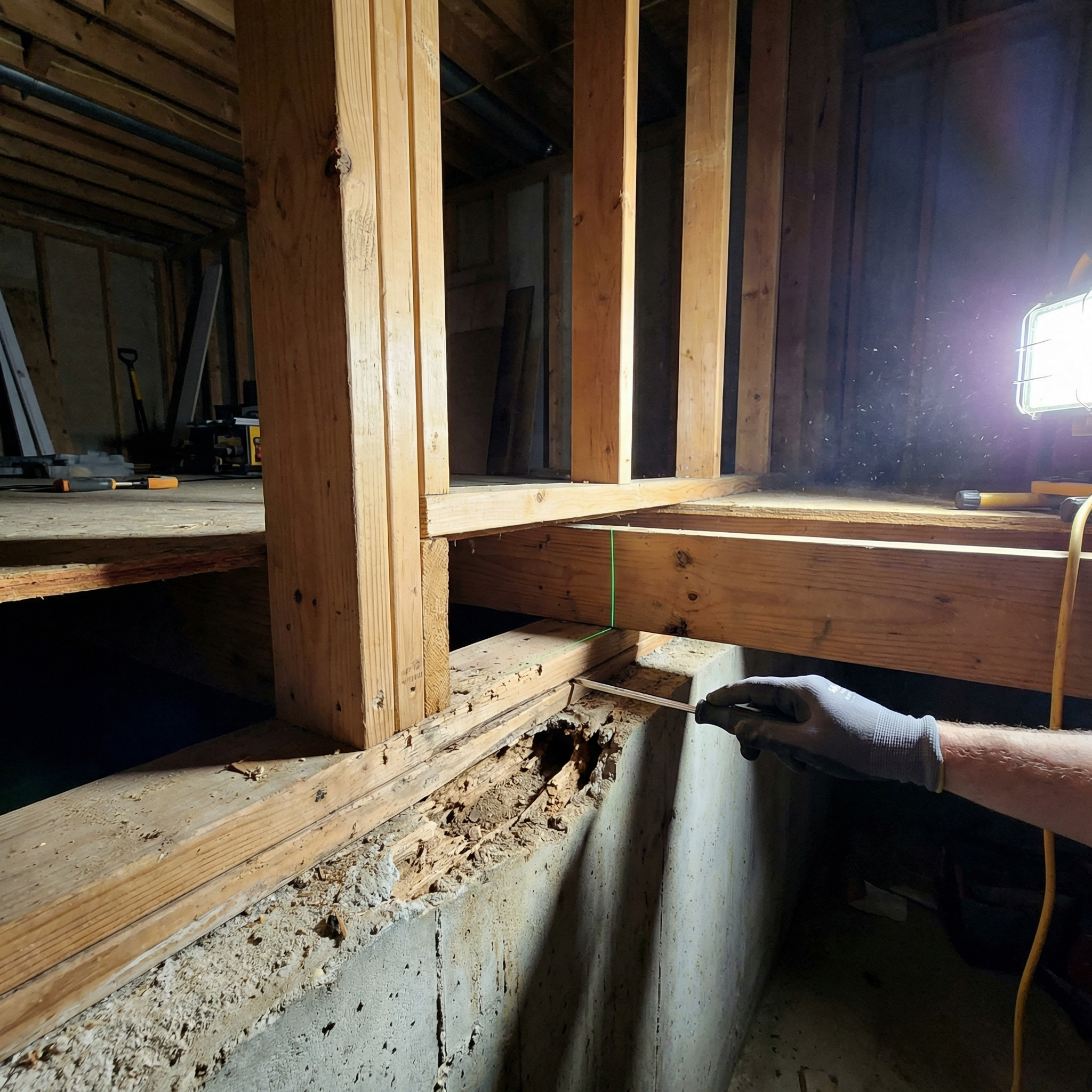
The sill plate and rim joist look modest compared with large beams or thick foundation walls, but they occupy a crucial spot in the load path. Sills act as the interface where wall loads and floor framing rest on the foundation. Rim joists tie the ends of floor joists together and help keep the building from rolling or racking sideways. When termites hollow these components, they are not just eating a board at the edge of the house; they are undermining the connection that passes loads into the support below. That is why even a narrow run of damage at the perimeter deserves extra attention.
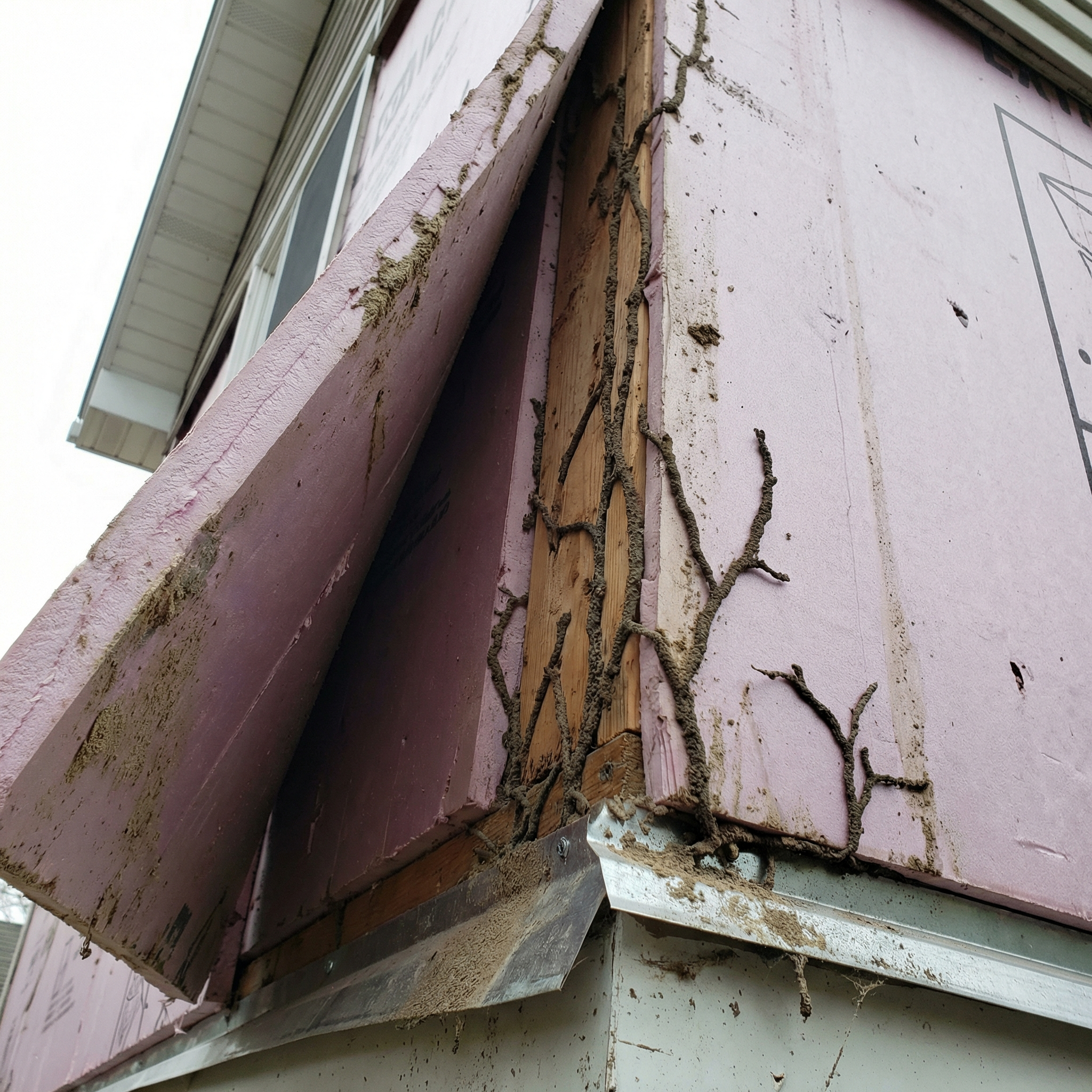
From a pest control standpoint, sills and rims are also frequent first-contact points for wood-destroying organisms. They are close to soil, often near moisture, and sometimes concealed behind finishes that delay early detection. A few inches of damage in these locations may represent years of hidden activity and quiet load redistribution. When you stress the role these pieces play, owners start to see why you treat and monitor them differently than non-structural trim. In their minds, they move from “a little rotten board” to “a critical part of what holds the house up.”
When Termites Cut the Load Path at the Edges
Termites rarely remove a whole sill or rim at once; they carve galleries, thin the cross-section, and leave fragile shells behind. Even if the board still looks mostly intact, its ability to transfer load evenly can be sharply reduced. This can lead to subtle floor dips, sticky doors, or cracking finishes as loads shift toward stiffer, undamaged paths. The house may keep standing, but stresses concentrate in ways the original design never anticipated. That quiet change is exactly what makes “small” edge losses capable of outsized consequences.
During an inspection, framing the issue in terms of interrupted load paths keeps you from dismissing damage just because it occupies a short run. A three-foot section of compromised sill directly under a bearing wall is far more serious than a longer run under a non-bearing partition. Explain to the client that where termites eat can matter more than how long the damaged strip appears. When owners hear that a weakened edge board is part of the system keeping floors level and walls plumb, they are more receptive to timely treatment and follow-up evaluations. You are helping them see structural context instead of just surface scars.
Inspection Moves That Reveal Hidden Sill and Rim Losses
Load-path aware termite inspections pay extra attention to zones where sills and rims are likely taking on significant weight. That means checking under main bearing walls, at corners where two wall lines meet, and below heavy features such as masonry chimneys or large openings. In these areas, you are not only looking for insect signs, but also for subtle movement clues like separations, sloping, or repeated patching. Each clue can indicate that termites have quietly weakened a link in the load path. When those clues align with signs of wood destruction, the structural stakes increase.
Simple tools and habits can improve your odds of catching these issues before they become obvious to the untrained eye. A bright flashlight, a probing tool, and a willingness to linger along the perimeter go a long way. Pay attention to transitions between materials where the sill or rim may be hidden but still accessible from below or inside. Note any spots where prior repairs appear to focus only on cosmetics without addressing the underlying structural member. By documenting both insect evidence and load-path implications together, you produce reports that speak clearly to owners, contractors, and real estate professionals alike.
Explaining “Outsized Consequences” to Concerned Homeowners
Owners often struggle when they see a small damaged area paired with a recommendation for significant treatment or evaluation. This is where a simple, visual explanation of the load path becomes one of your strongest communication tools. You can describe the building as a series of stacked arrows carrying weight down to the ground, and then point to where termites are erasing part of an arrow. Once they picture that, it feels logical that even a short missing section can throw the rest of the arrows off balance. They understand you are focusing on the role of the board, not only on the length of visible damage.
To make this even clearer, compare the damaged sill or rim to a single missing tooth in a gear. The gear may still spin, but every turn stresses the gap and surrounding teeth. Managers and homeowners quickly recognize that waiting invites more distortion and potential failure. This style of explanation positions you as a partner safeguarding their investment, not just selling a treatment. It also prepares them for potential referrals to structural professionals when the level of damage crosses into safety concerns.
Prioritizing Treatment and Repairs Along the Load Path
When you view the structure through a load-path lens, treatment plans become more strategic and defensible. Areas of active termite pressure that intersect major load paths move to the top of the list for targeted treatment and close monitoring. Less critical locations may be candidates for more limited intervention, as long as they are included in a broader prevention plan. This hierarchy helps owners direct their budgets where the risk to structural performance is highest. Clear logic behind your priorities reduces pushback and builds long-term relationships.
Repair recommendations also benefit from explicit load-path thinking. Instead of a vague suggestion to “replace damaged wood,” you can specify that sill or rim repairs should restore both bearing capacity and proper connections to surrounding framing. Where damage is extensive, you can recommend that a qualified structural professional design reinforcements that re-establish a continuous path for loads. By articulating the goal as rebuilding the “missing link” in the chain, you help everyone involved focus on performance, not just appearance. This approach integrates pest control, construction, and engineering into a unified protection strategy.
Partnering With a Pest Professional Who Thinks Structurally
For property owners, choosing a termite provider who understands load paths can mean the difference between routine treatments and truly protective service. A structurally minded inspector recognizes that sill and rim losses are not just another line item on a report. They understand that each compromised location has a specific role in carrying the building’s weight, and they tailor their recommendations accordingly. That depth of insight leads to more accurate risk assessments and better timing of any needed follow-up work. It also keeps minor edge damage from quietly evolving into costly structural correction.
For pest control companies, building this kind of structural literacy into training is a powerful differentiator. Technicians do not need to be engineers, but they should comfortably trace basic load paths and identify where termite activity intersects them. When they present findings through that lens, owners perceive higher value, real estate partners gain confidence, and referral networks strengthen. Over time, your team becomes known not only for eliminating termites, but also for protecting the way a building stands and performs. That reputation starts with one simple mental shift: seeing every sill and rim not as a board, but as a vital link in the home’s load path.