
Safe, Sustainable Termite Exploratory Inspections Start With Smarter PPE
Exploratory termite inspections push technicians into the tightest, dustiest, and least predictable parts of a property. Crawlspaces, attic voids, and hidden structural chases can hide more than termites; they often hold mold spores, rodent droppings, and abrasive debris. Without intentional personal protective equipment, every search for termite evidence quietly adds wear and tear to a technician’s body. Over months and years, that wear becomes injuries, missed days, and rushed shortcuts that weaken inspection quality. A strong PPE culture protects people first, and in doing so, keeps termite inspections consistent, thorough, and sustainable for the long term.
Safety Mindset That Makes Exploratory Inspections More Sustainable
Before a respirator, knee pad, or coverall ever comes out of the truck, a safety mindset has to be in place. Termite professionals work under time pressure, and skipping PPE is often framed as a way to finish faster. In reality, those shortcuts usually lead to awkward body positions, irritated lungs, and contaminated clothing that slow down every step afterward. When teams normalize PPE as part of the inspection toolkit, not an optional extra, technicians stop treating safety as a separate chore. That shift keeps energy levels steadier, decisions sharper, and inspection quality more repeatable across every structure.
A sustainable safety mindset also looks beyond the single visit and considers whole-career health. Kneeling on rough concrete today might feel manageable, but the cumulative strain across thousands of inspections can be devastating. Breathing in one dusty crawlspace without protection seems minor, yet those exposures repeat week after week. By treating every inspection as a chance to protect tomorrow’s body, technicians naturally reach for their gear without hesitation. That habit directly supports service consistency, because the same experienced inspectors remain healthy, engaged, and available season after season.
Respirators: Breathing Easier in Dusty, Confined Termite Hotspots
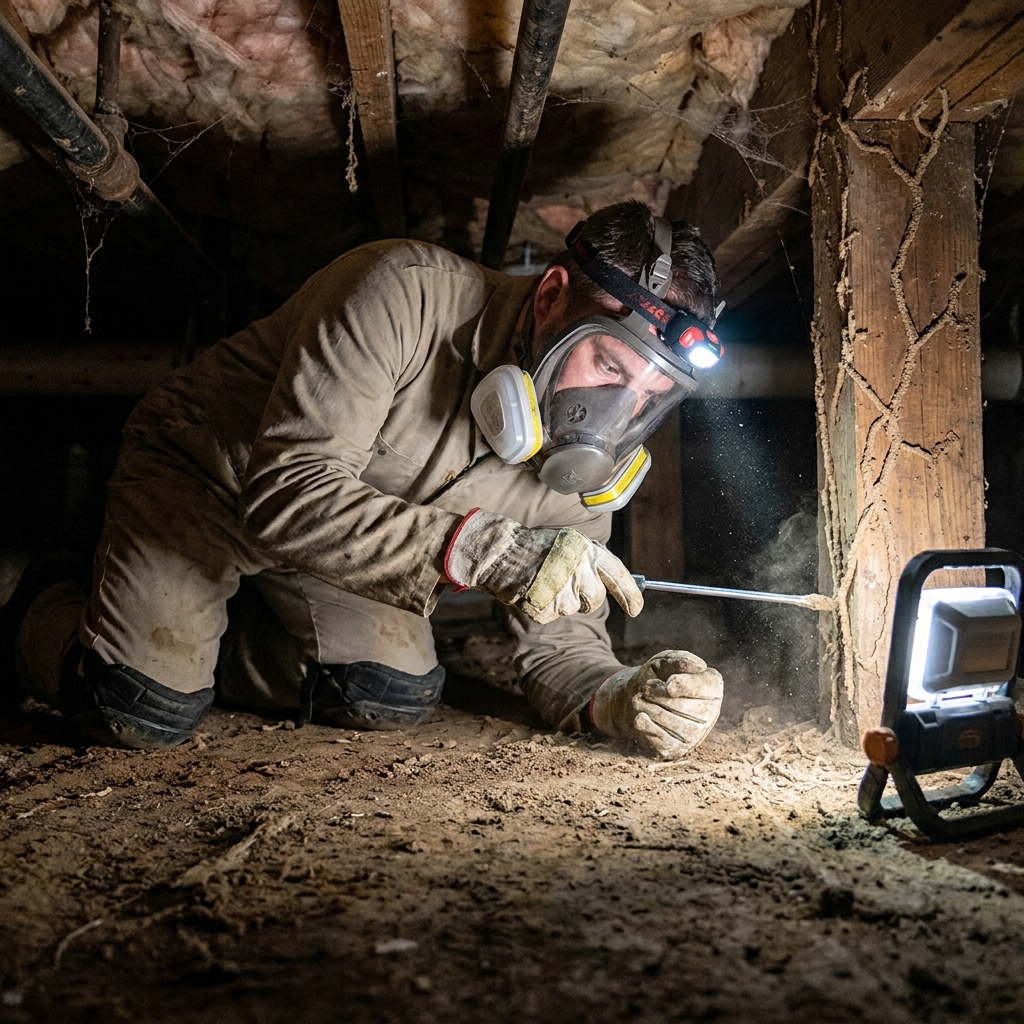
Respirators are more than a comfort item during exploratory inspections; they are a core quality-control tool. Attics, subfloors, and wall cavities often hold fine dust that becomes airborne the moment insulation or debris is disturbed. Without respiratory protection, technicians may limit the time they spend in those spaces, subconsciously rushing to escape discomfort. That rush increases the chance of missing subtle termite galleries, frass, or moisture clues. When breathing feels protected and steady, inspectors can slow down, scan more carefully, and document findings with calm precision.
Different inspection environments can justify different respirator options, and awareness of these choices matters. Disposable filtering facepieces may be enough for lighter dust, while half-face respirators with appropriate cartridges can handle heavier particulate exposure. Consistently fit-checking the seal before entering a confined area prevents slow air leaks that reduce protection and confidence. A designated storage case keeps respirators clean between jobs, so they are ready for use instead of buried under tools. These small routines protect lungs, reduce fatigue from poor air quality, and ultimately support more reliable termite detection in every corner of a property.
Knee Pads: Protecting Joints While You Protect Structures
Knee pads can seem trivial compared with respirators, yet they strongly influence how much ground an inspector actually covers. Exploratory termite inspections demand frequent crawling along slab edges, under plumbing lines, and beside foundation walls. Without cushioning, every shift onto hard surfaces sends a jolt through the knees, encouraging technicians to hurry and skip marginal areas. Over time, chronic knee soreness can cause experienced inspectors to avoid certain positions altogether. When joint protection is prioritized, technicians gain freedom to linger longer where termite evidence actually hides.
Well-chosen knee pads also reduce the chance of on-the-job strains that sideline team members during peak swarm seasons. Straps that stay put and padding that does not compress flat maintain comfort across multiple properties each day. With dependable support, inspectors can move smoothly between standing, kneeling, and crawling without grimacing or hesitation. That fluid movement is exactly what detailed termite inspections require, especially in cluttered storage zones and low-clearance crawlspaces. The result is a workforce that stays healthier, covers more surface area, and consistently gathers richer structural information for treatment decisions.
Coveralls: Keep Contaminants Off Skin, Clothing, and Client Spaces
Coveralls serve as a mobile barrier between the harshest parts of a structure and the technician’s body. Exploratory inspections often brush technicians against insulation fibers, soil contact points, and surfaces stained by past moisture problems. When regular clothing takes the hit, those contaminants travel into the cab of the vehicle and onto the next client’s driveway. Reusable or disposable coveralls break that chain, keeping both technicians and property owners better protected. They also make it easier to move confidently through tight, dirty spaces without worrying about ruining uniforms.
Thoughtful coverall use sends a clear signal to clients about professionalism and respect for their home. Stepping into coveralls before entering a crawlspace, then removing them before reentering finished rooms, demonstrates contamination control. That simple choreography reassures homeowners that termite investigations will not track crawlspace dust across carpeting or flooring. It also simplifies end-of-day cleanup, because technicians can bag disposable suits or launder dedicated inspection coveralls separately. Less time spent on cleanup means more predictable schedules, steadier morale, and better focus reserved for evaluating termite risk zones.
Building PPE Routines Into Every Termite Inspection Visit
PPE awareness delivers real value only when it is translated into predictable routines every time the truck door opens. Storing respirators, knee pads, and coveralls in a dedicated, easily reached compartment removes friction from using them. A quick mental or written checklist before approaching each structure helps technicians match gear to the spaces they expect to enter. Supervisors can reinforce these habits by modeling the same preparation ritual on ride-alongs and training days. Over time, gearing up becomes as automatic as grabbing a flashlight or moisture meter.
Embedding PPE checks into job documentation further keeps awareness high without adding unnecessary paperwork. Digital inspection forms can include brief prompts confirming respirator readiness, knee protection, and appropriate clothing barriers before exploratory work. Those prompts function less as enforcement and more as gentle reminders that safety and quality go together. When technicians feel supported rather than criticized, they are more likely to speak up about worn straps or damaged filters. Catching and correcting those small issues early keeps inspections running smoothly and prevents last-minute scrambles for replacement gear.
Talking PPE With Clients to Reinforce Professionalism and Value
Clients notice when a termite inspector arrives organized, geared up, and calm about entering tough spaces. Taking a moment to explain why respirators, knee pads, and coveralls are part of the inspection process turns that observation into trust. Homeowners quickly understand that protective gear means inspectors can spend more time where problems actually begin. It also reassures them that no one is casually tracking crawlspace contamination into living spaces or vehicles. Those conversations position PPE as a visible extension of the same care applied to their termite protection plan.
When clients see PPE as a normal part of exploratory inspections, they are less likely to rush the process or undervalue the work. Educated property owners become allies in scheduling adequate time for safe, detailed evaluation of structural elements. They also gain a clearer picture of the physical demands their inspector faces in protecting the property. That appreciation supports long-term relationships, referrals, and willingness to invest in proactive termite monitoring services. In the end, PPE awareness strengthens not only technician safety, but the entire ecosystem of trust that keeps termite inspection programs thriving.