
Gutter Guards Through a Termite Inspector’s Eyes
Across the country, more homeowners are installing gutter guards and marketing often promises maintenance-free living and perfectly controlled rainwater. From a termite and pest control perspective, that story is only half finished because the real question is what happens to the water that still has to move through the system. Gutter guard evaluations must balance debris control with the need to inspect and service roof drainage paths all the way to the ground. When those paths are hidden, blocked, or poorly directed, soil and structural moisture conditions can quietly shift in termites’ favor. Termite professionals who learn to read gutter protection systems gain a powerful edge in preventing damage instead of just documenting it.
For many homeowners, gutters live in a different mental category than pest protection even though they share the same main enemy: excess moisture around wood. That disconnect creates room for problems, because an excellent soil treatment or monitoring program struggles to overcome constant wetting at the foundation. By intentionally reviewing gutter guards on every exterior inspection, pest pros draw a sharper picture of how rain really flows across a property. That picture helps explain active infestations, recurring swarmers, or chronic moisture readings that do not match visible soil conditions. It also creates a practical, visual conversation with clients about home maintenance that supports long-term termite protection.
Roof Runoff, Gutters, and the Moisture Termites Love
Every drop of rain that lands on a roof has to travel somewhere, and the termite risk rises or falls along that path. Properly sized and maintained gutters move water off the roof, down the downspouts, and away from wood and foundation elements. When that flow breaks down, water may spill over the front edge, leak behind the gutter, or collect at the downspout discharge point. Even if the roof decking stays dry, saturated soil at the footing line or persistent splash-back on lower siding can create ideal termite conducive conditions. A thoughtful termite inspection treats the entire drainage system as a moisture highway that needs to be mapped and evaluated.
Gutter guards change how that highway behaves by altering the first step where roof water enters the trough. Some designs restrict entry under light rain and shed heavy rain over the edge, driving concentrated runoff straight into planting beds and foundation soil. Others trap fine debris near outlets, disguising partial blockages that only show up as staining or mildew on the fascia. In freeze-prone climates, trapped moisture near guards can promote ice formation that damages gutters and opens new leak paths along the eave. The more altered and covered the system becomes, the more important it is for pest professionals to observe stains, soil erosion, and plant growth patterns that hint at unseen drainage issues.
Access and Visibility: Can You Actually Inspect the Drainage Path?
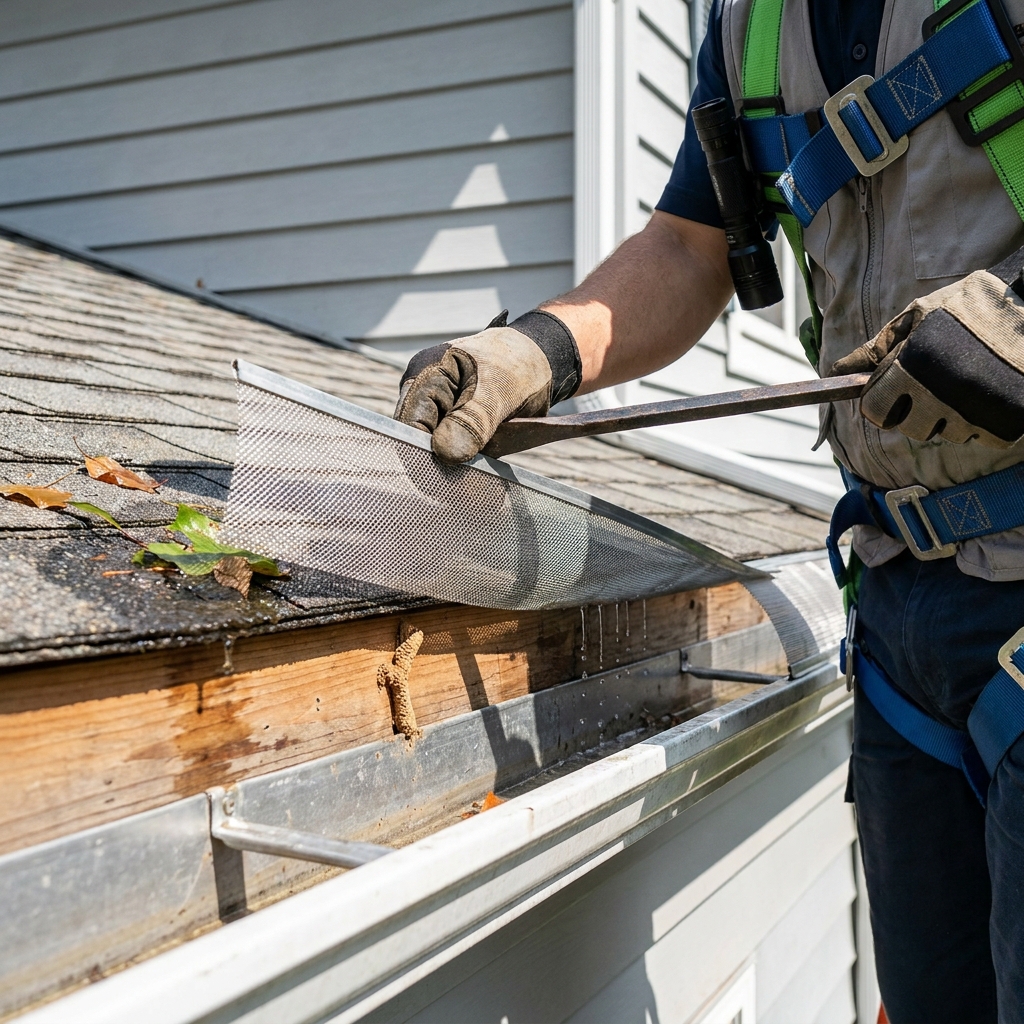
From ground level, a solid gutter cover can look tidy and problem-free while hiding serious water management failures. Termite inspectors, however, rarely have the time or authority to disassemble gutter systems during a routine visit. That makes visual access a primary factor when deciding how much confidence to place in exterior observations. Systems that allow at least partial sight into the trough or outlet areas give inspectors more clues about sediment buildup, standing water, or rust. Completely sealed systems demand that you rely more heavily on indirect evidence from walls, soil, and interior leak history.
When access is limited, inspectors can still evaluate performance by treating each component of the drainage path as a checkpoint. The roof edge, the face of the guard, and the fascia reveal whether water has been consistently overflowing with characteristic streaks, stripes, or algae. Downspout joints, elbows, and extensions show whether water is reaching the ground or escaping at higher joints. Soil splash on foundation walls or mulch displacement marks the most common landing zones for uncontrolled runoff. By deliberately moving around the home and tracing this path, a termite professional can form a clear opinion about whether gutter protection is helping or quietly undermining moisture control.
Common Gutter Guard Styles and Their Termite-Related Tradeoffs
Different gutter guard designs create different inspection challenges and different moisture risks around wood structures. Foam inserts sit inside the gutter and block larger debris while allowing water to soak through, but they can hold moisture and organic matter against metal surfaces for long periods. Brush-style inserts behave similarly by catching leaves while still leaving plenty of area for fine material to accumulate and decay. Perforated covers and micro-mesh systems excel at excluding small debris but may clog at the surface, causing water to sheet over the edge during storms. Solid covers with a front slot rely on water tension to pull runoff into the gutter, which can work well under moderate rain but send excess water into flower beds and foundation lines during downpours.
Termite and pest professionals are not expected to be gutter designers, yet recognizing these tradeoffs sharpens moisture assessments. Micro-mesh systems that appear pristine from the yard might be masking a trough packed with shingle grit and sludge, especially near downspouts where termites benefit from chronic dampness in adjacent soil. Foam inserts that never fully dry can support mold and wood decay near fascia boards and rafter tails, creating vulnerable wood for future infestation. Solid covers in steep roof valleys can overshoot so consistently that the same corner of the home stays soggy year-round. When inspectors connect specific guard designs with consistent field patterns, they can more accurately explain why termites favor certain exterior walls or foundation segments.
Field Checklist for Pest Pros When Gutter Guards Are Present
A structured checklist keeps gutter guard observations from becoming a quick glance and a passing comment. Start at the front of the property and circle the structure, noting where guards are installed and where traditional open gutters still exist. Compare the sections and ask whether staining, algae, or paint wear is heavier beneath guarded zones or open troughs. Look straight up at roof valleys, roof-to-wall intersections, and long roof runs that feed into short gutter sections, since those areas are most likely to be overwhelmed. At each downspout, observe whether the guard system appears to encourage or restrict water entry near the outlet.
- Note visible overflow indicators such as striping on fascia, discoloration on siding, and streaks on masonry below gutters.
- Check ground conditions beneath each downspout for washed-out mulch, exposed roots, or soil depressions that suggest high-volume discharge.
- Verify that extensions or splash blocks actually move water a meaningful distance away from foundation walls and slab edges.
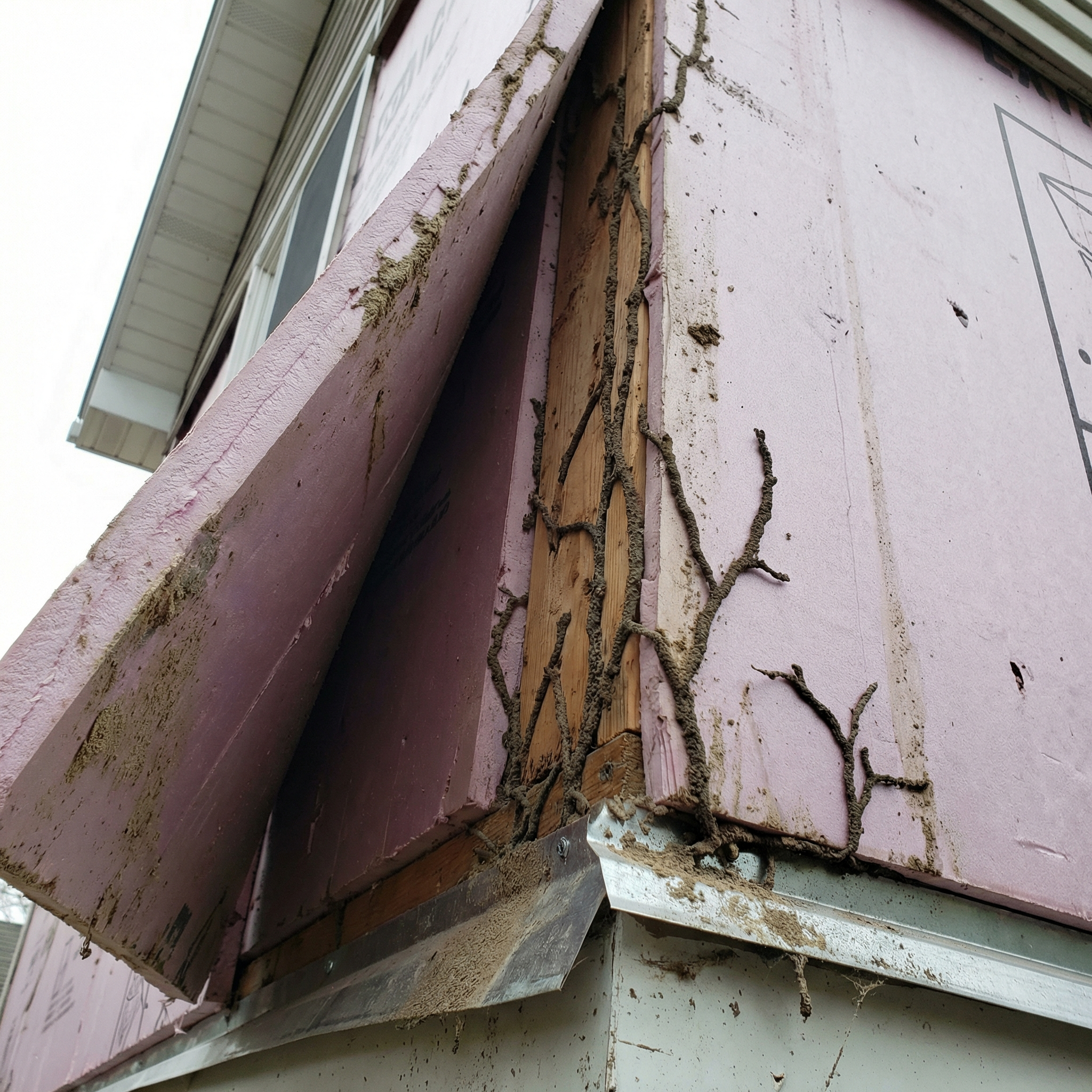
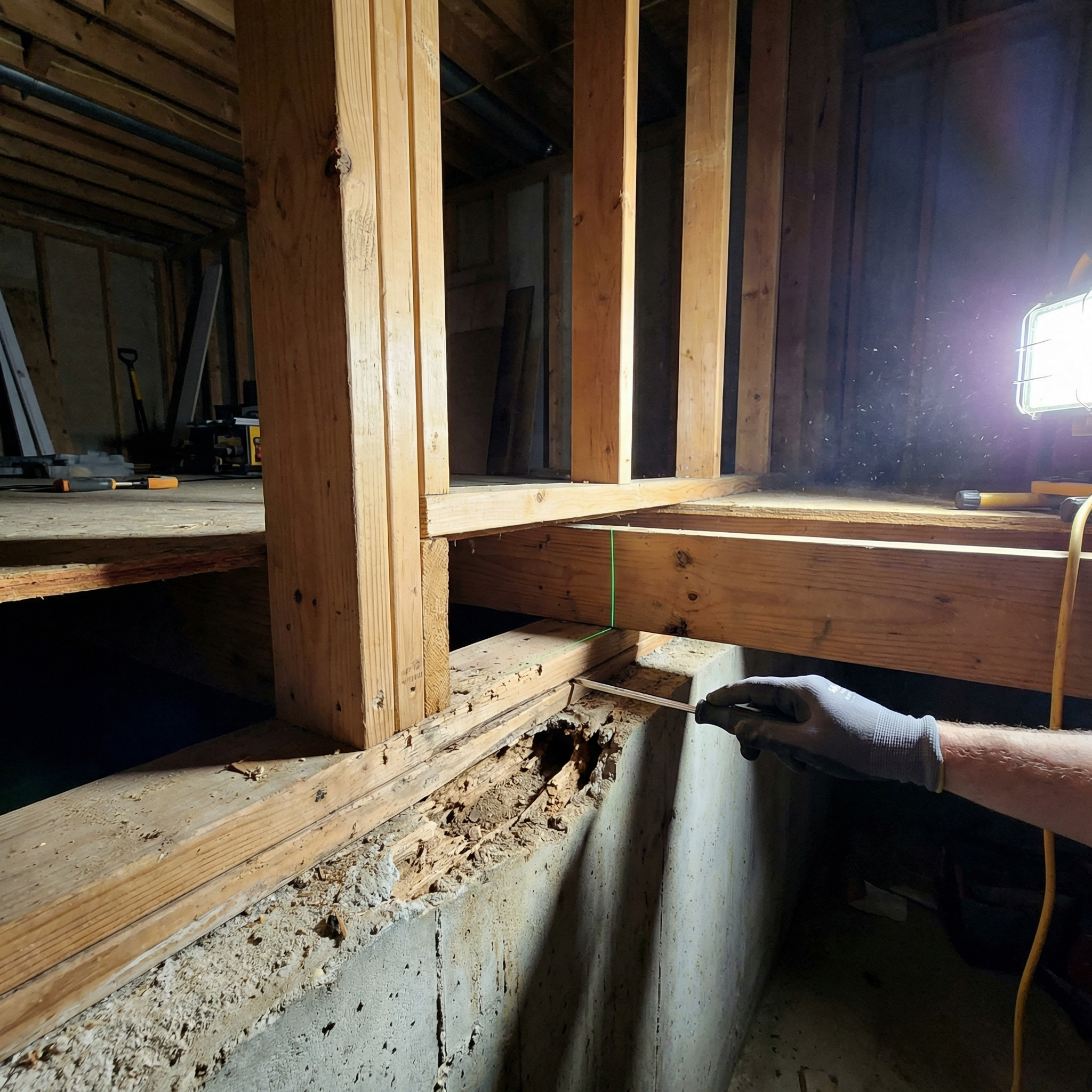
As you work through this checklist, connect each observation back to termite conducive conditions instead of treating them as separate roofing issues. A single corner with heavy overflow staining and soft, damp soil is often the same corner where mud tubes, swarmers, or damaged trim first appear. Documenting these patterns with photos reinforces recommendations for water management improvements that support pest control programs. When writing service notes or inspection reports, clearly link drainage findings to the likelihood of ongoing wood moisture and future termite activity. This approach positions gutter guard evaluation as an integral part of a thorough pest inspection rather than a side comment about home maintenance.
Communicating With Homeowners About Gutter Guards and Termite Risk
Many clients hear the phrase gutter guard and mentally file their gutters under the category of set it and forget it. Pest professionals can gently challenge that belief by focusing on moisture and structural protection rather than criticizing specific products. Explain that guards reduce certain kinds of debris but do not eliminate the need to check water flow and discharge locations. Emphasize that termites do not care whether a home has premium guards or basic open gutters; they respond to persistent moisture and accessible wood. By framing the conversation around termite risk, you connect an everyday exterior feature to something homeowners already take seriously.
When possible, use visible signs on their own home instead of generic warnings. Show them where overflow has discolored the fascia, washed away landscape material, or kept soil damp against the foundation. Point out that even high-quality guards can shift, warp, or clog at corners and outlets, requiring periodic service by a gutter professional. Encourage clients to schedule inspections of their roof drainage system, especially after major storms, roof work, or tree trimming. Tie these visits to their termite protection plan so they view gutter maintenance as one of the tools that keeps warranties meaningful and infestations less likely.
When Pest Pros Should Recommend Gutter Guard Changes
There are situations where simply noting gutter guards in a report is not enough and a clear recommendation for modification is appropriate. If guards are obviously sagging, detached, or trapping visible debris at roof valleys, they may be directing large volumes of water straight onto decks, steps, or wood cladding. When concentrated discharge lines up with active or historical termite damage, the connection should be highlighted for the client. Guards that prevent access to heavily impacted sections can also justify a recommendation to consult a gutter or roofing contractor for evaluation. The key is to focus on the moisture outcome rather than criticizing the idea of gutter protection itself.
Termite inspectors should be careful to stay within their professional scope while still providing meaningful guidance. Phrasing such as recommend evaluation by a qualified gutter contractor keeps the advice actionable without implying you will perform the work. Note whether hidden drainage paths limited your ability to fully inspect eave and fascia conditions. Clarify that correcting drainage and guard issues supports both structural integrity and the effectiveness of termite treatments or monitoring systems. Over time, consistent, moisture-focused recommendations reinforce your role as a trusted advisor who looks beyond insects to the conditions that attract them.
Building Gutter Guard Evaluation Into Every Termite Inspection
Integrating gutter guard assessment into standard inspection procedures does not require new tools, only new habits and language. Training technicians to walk properties with drainage in mind helps them notice small clues that were previously overlooked. Encourage them to photograph notable guard conditions and linked moisture evidence so those images can be referenced at follow-up visits. Create simple internal checklists that prompt staff to record whether guards are present, functioning, or contributing to visible overflows. Consistency across your team ensures that clients receive the same high level of moisture-focused insight regardless of which technician visits.
From a business perspective, disciplined gutter guard evaluation elevates your company beyond a narrow insect control role. It allows you to explain termite risk in practical, visible terms that homeowners understand every time it rains. It also uncovers opportunities to collaborate with roofing and gutter professionals, expanding your referral network around shared goals of protecting structures. When clients see that you are paying attention to how their entire home manages water, they are more likely to value ongoing inspection agreements. In that way, a careful look at gutter guards becomes a small habit that supports stronger termite prevention and stronger customer relationships.